24th Prime Minister of Australia
Paul Keating
Labor prime minister of Australia, 1991–1996.
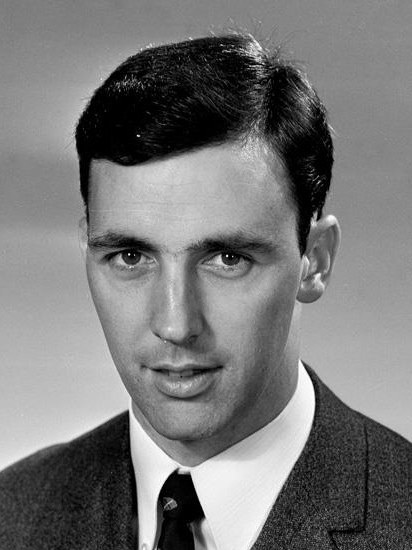
Biography
Paul John Keating was born on 18 January 1944 in Sydney and grew up in the working-class suburb of Bankstown in a Catholic family of Irish descent. He attended De La Salle College in Bankstown but left school at fifteen to work as a clerk with the Sydney County Council. He also briefly managed a rock band while becoming active in the Labor Party's youth wing.
Keating rose quickly through Labor and union networks in western Sydney, gaining the patronage of senior party figures including former Premier Jack Lang. He became president of the New South Wales Young Labor Council and worked as a research officer for a trade union before winning preselection for a federal seat.
At the age of 25 Keating was elected to the House of Representatives for the seat of Blaxland at the 1969 election. He served briefly as Minister for Northern Australia in the final weeks of the Whitlam government in late 1975. In opposition he held shadow portfolios including minerals and energy, and became a prominent figure in the parliamentary party.
When the Hawke government took office in March 1983, Keating became Treasurer, a post he held until 1991. He oversaw the floating of the Australian dollar in December 1983, the deregulation of the financial system including the entry of foreign banks, and the Prices and Incomes Accord with the trade union movement. His 1985 tax reforms introduced a capital gains tax, a fringe benefits tax and dividend imputation. He also served as Deputy Prime Minister from 1990. After unsuccessfully challenging Hawke in June 1991 and moving to the backbench, he won a second challenge on 19 December 1991 by 56 votes to 51 and was sworn in as Australia's 24th Prime Minister the following day.
Facing a recession and high unemployment, Keating released the One Nation economic statement in 1992 and introduced the compulsory Superannuation Guarantee. His Redfern Park speech of December 1992 acknowledged the dispossession of Aboriginal people. Against expectations, Labor won the election of 13 March 1993, defeating the Coalition's Fightback! platform, which included a goods and services tax. In response to the High Court's Mabo decision, his government passed the Native Title Act 1993. It introduced enterprise bargaining, launched the Working Nation employment program, promoted the APEC leaders' meeting and Australia's engagement with Asia, signed a security agreement with Indonesia in 1995, and advanced the case for an Australian republic.
Labor lost the election of 2 March 1996 to the Coalition under John Howard, and Keating resigned from Parliament soon afterwards. In later years he worked in investment banking and business advisory roles, published books including Engagement, and remained an outspoken commentator on foreign policy, superannuation and economic history, including criticism of the AUKUS submarine arrangements. He married Annita van Iersel in 1975; they had four children and separated in 1998.
Public debt while in office
- Debt to GDP, taking office
- 21.6% (end-1991)
- Leaving office
- 31.1% (end-1995)
- Change
- +9.5 points of GDP
- In dollars (at the time)
- $89.8 billion → $154.4 billion
Gross public debt of all levels of government as a share of GDP at the year-end nearest each change of prime minister (IMF). Compare every prime minister.