3rd Prime Minister of Australia
Chris Watson
Labor prime minister of Australia, 1904.
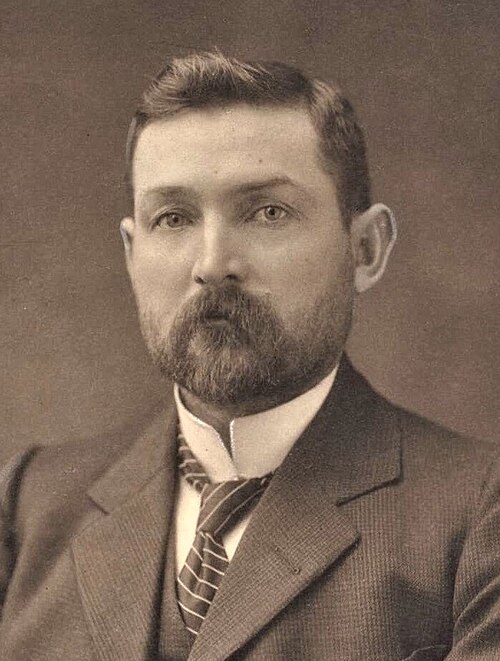
Biography
John Christian Watson was born on 9 April 1867 in Valparaíso, Chile, as John Christian Tanck, the son of a seaman of German descent; little is certain about his early family life. After his parents separated, his mother married George Watson in New Zealand, and the boy took his stepfather's surname. He left school young and worked on the railways and as a compositor's apprentice before moving to Sydney in 1886, where he worked as a compositor on newspapers and became active in the typographical union and the Sydney Trades and Labor Council.
Watson helped organise the Labor Electoral League in New South Wales and served as president of its central council. In 1894 he was elected to the Legislative Assembly for Young. At the first federal election in 1901 he won the seat of Bland, and he later represented South Sydney from 1906 until his retirement in 1910. On 8 May 1901 the federal Labor members elected him as the first leader of the parliamentary party, a role in which he supported the Barton and Deakin governments in return for legislative concessions, while backing the Immigration Restriction Act and the wider White Australia policy that then commanded support across the Parliament.
In April 1904 Labor withdrew support from Deakin's government over the scope of the proposed Conciliation and Arbitration Bill, and Watson was commissioned as prime minister on 27 April 1904, at the age of 37. His was the first Labor government at the national level anywhere in the world and remains the youngest prime ministership in Australian history. Lacking a majority, the minority government made little legislative headway, and after a defeat on an amendment to the arbitration legislation it resigned. Watson left office on 18 August 1904 and George Reid succeeded him.
Watson resigned the Labor leadership in 1907, citing his health and family circumstances, and was succeeded by Andrew Fisher. He retired from Parliament in 1910 and turned to business interests. During the First World War he supported conscription and was expelled from the Labor Party in 1916, later associating with the Nationalists. He also held a long association with the National Roads and Motorists' Association in New South Wales, serving in senior office. Watson died in Sydney on 18 November 1941.
Public debt while in office
- Debt to GDP, taking office
- 49.7% (end-1903)
- Leaving office
- 47.9% (end-1904)
- Change
- -1.8 points of GDP
Gross public debt of all levels of government as a share of GDP at the year-end nearest each change of prime minister (IMF). Compare every prime minister.